Behind the scenes · 12 May 2026
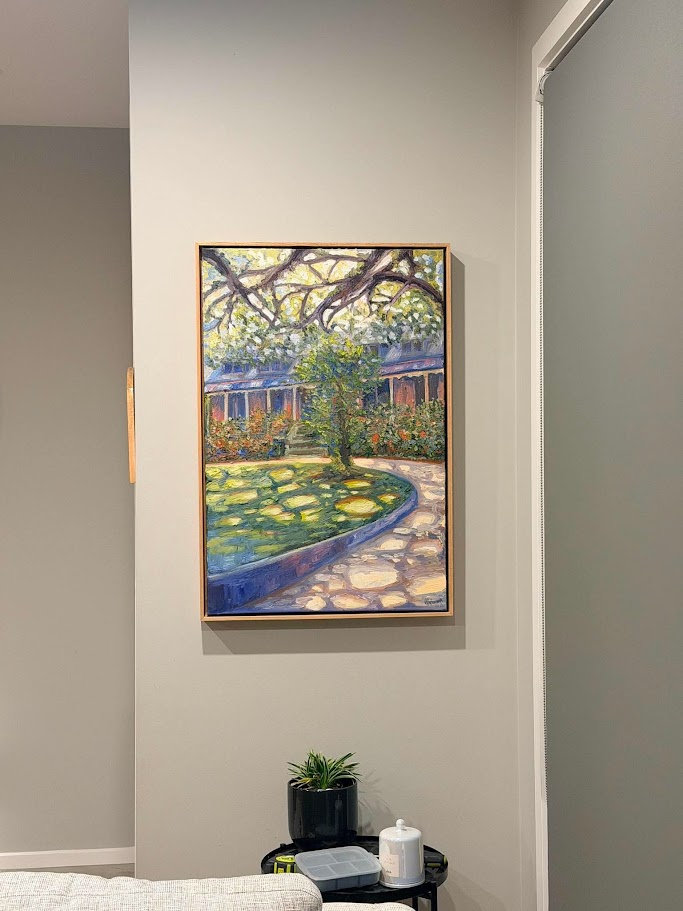
I painted my best friend's wedding venue for their present!
Wedding gifts are hard these days. What do you give a couple who are happily settled in their life with a lovely home? And this was not just any couple – my brother-in-law was marrying my best friend. There was no way I was settling on a cutlery set or a new vase. I wanted to make them a gift that felt like it belonged not just to the wedding day, but to the life they were beginning together – something they could keep, live with, and maybe one day look back on as part of their family story.
So I painted them a piece of art.
I kept coming back to the idea of an heirloom gift: not necessarily something grand or expensive, but something made with care, intention and permanence. Weddings are full of beautiful things that only exist for a day – flowers, table settings, speeches, tiny moments of chaos and joy – and I loved the idea of creating something that could last beyond all of that. A small anchor from the day. A keepsake made by hand.
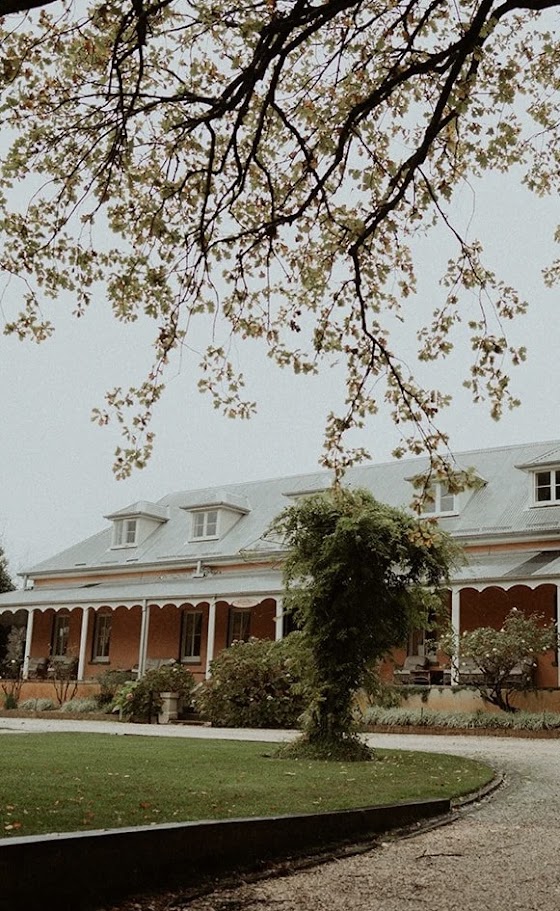
The subject of the painting was the next thing to be decided, but really, the choice here was easy. They were getting married at the Fitzroy Inn, a beautifully restored colonial building nestled in the foothills of Mt Gibraltar in the Southern Highlands of New South Wales. We’d just come back from a visit to the Inn for a food trial and I was struck by the gorgeous peachy-orange facade of the building, as well as the cottagecore landscaping that surrounded it.
Subject chosen, now we just needed a medium. I do both traditional and digital art, with watercolour being my go to when creating gifts. But somehow, watercolour didn’t feel like the right choice for this occasion. I wanted the painting to bold and tactile, to be a statement piece they could hang on their walls. I was also drawn to the idea of something slightly abstracted – deviating from my usual focus on details and realism to something a little more evocative and restless. When trawling through Pinterest for inspiration, I came across the work of Sergiu Ciochina, and I was blown away. The thing that stands out most in Ciochina’s paintings is how he captures light – as a physical, brilliant presence in the painting, bracketed by thick, oozy brushstrokes and whimsical colours that suffuse the paintings with a warm, dreamlike vibe. I highly recommend you browse through Ciochina’s works – they are simply stunning!
Emulating this style would require working with oil paints, which I hadn’t used in… probably 20 years. Yikes! Off I went to study some process videos on Ciochina’s Instagram, as well as a bunch of YouTube tutorials.
Soon, all that was left… was to start.
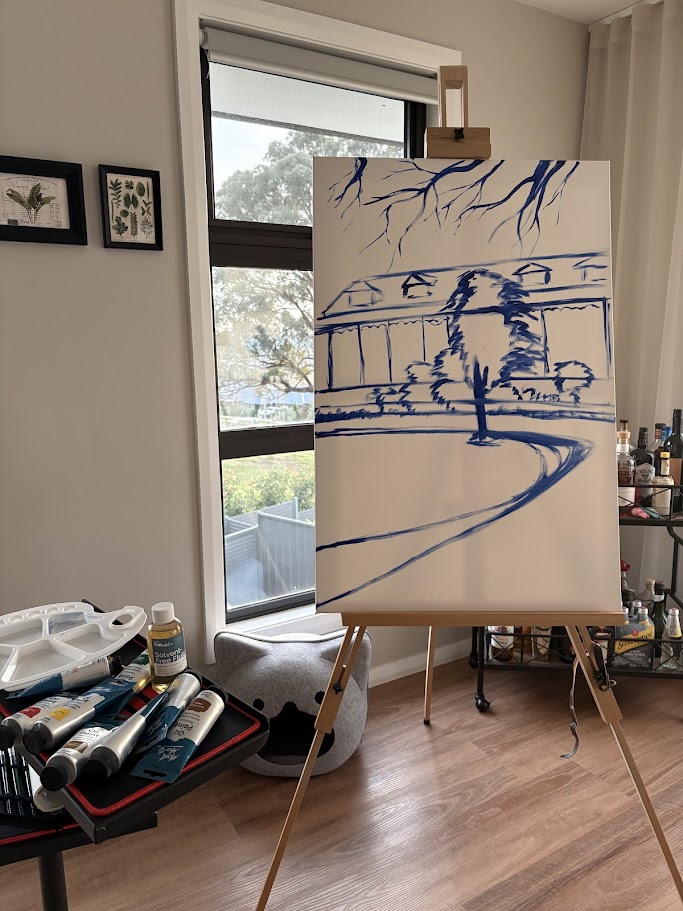
Some blue lines on a blank canvas
I picked out a reference photo that I could use to mimic Ciochina’s bold splotches of dappled light filtering through trees and onto the ground. I normally follow reference pictures verrrrryyy closely, but in this case, if I wanted to have those precious light dapples, I was going to need to trust the process and embrace some abstraction.
There was nothing else for it. I slapped down some lines in ultramarine on my canvas to rough out my composition, and we were on our way.
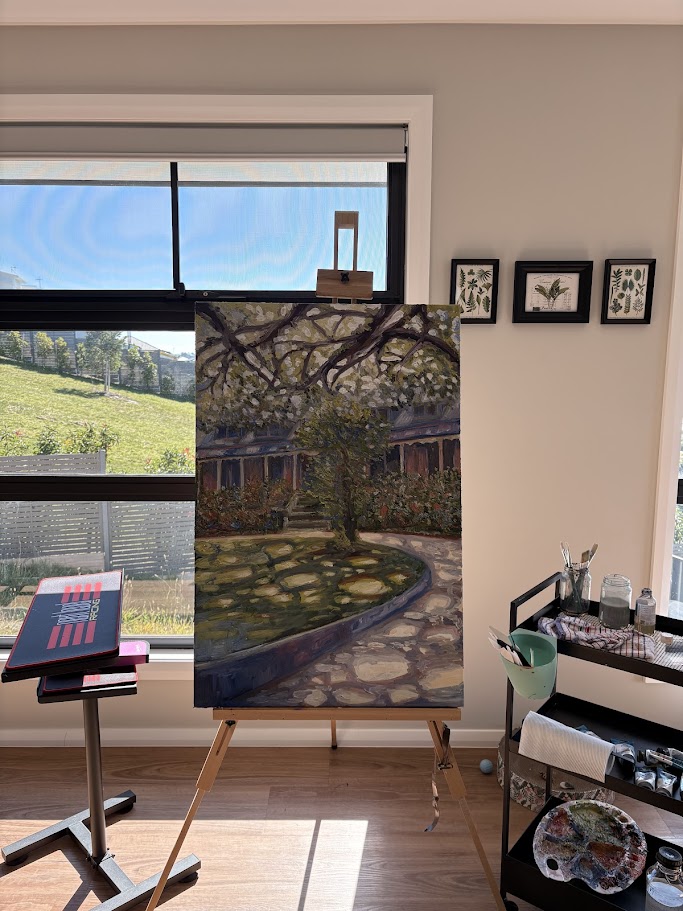
I’d forgotten how long it takes oil paints to dry, so this stage was… really, as fun as watching paint dry. But dry it did, and then I did my next giant leap out of my comfort zone: a browny-orange underpainting. And trust me when I say, this was the step I was doubting the most! I stood back after slathering the canvas with paint and prayed it would all work out. I was so mortified by how it looked at this point that I actually took the painting down from my easel and hid it in our garage when I had a friend visiting, because seriously, how do you explain THAT to someone, when it’s for a wedding gift, no less?!
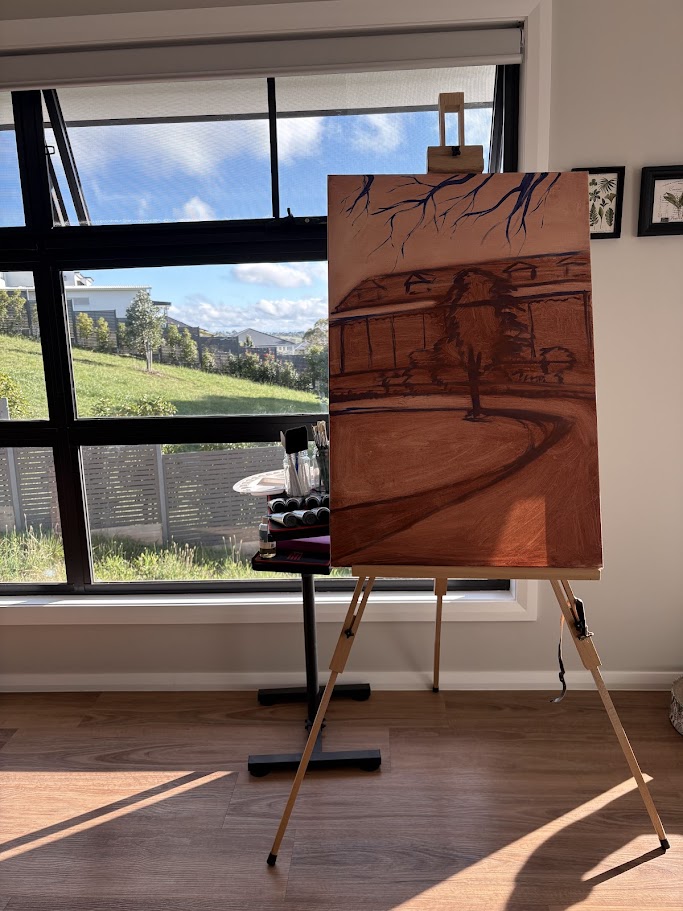
Another stretch of waiting for paint to dry later, I dove back in, desperate to cover up the brown. I employed Ciochina’s signature style of building up the world of the painting with layers of purpley-blue in the shadows. After several sessions building up the shadowed parts of the painting, I was tentatively starting to think, maybe this could be something.
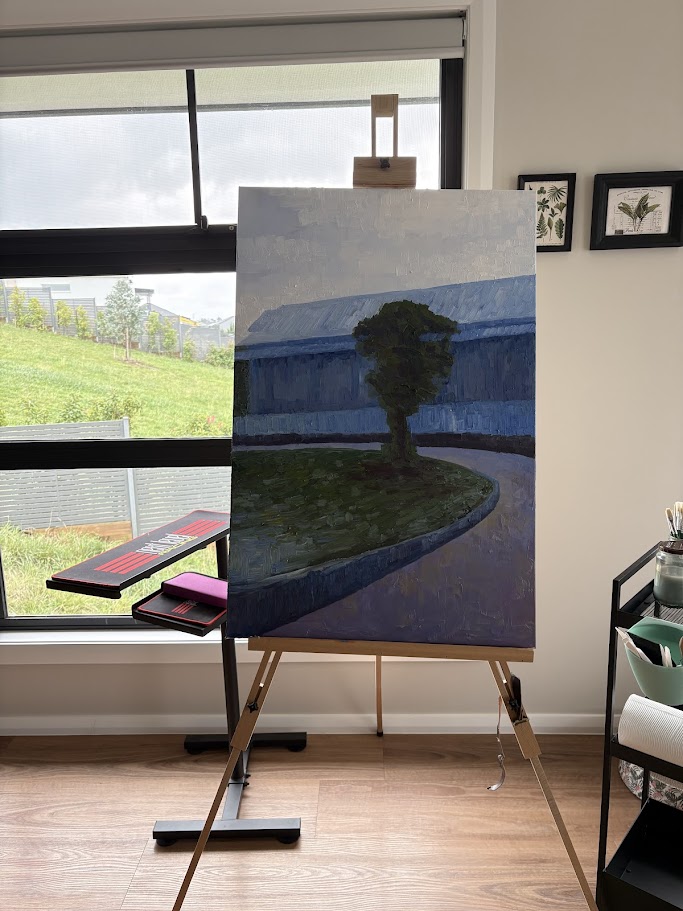
The awkward phase
The tentative feelings of victory were short lived.
I started trying to incorporate the light colours, the bold highlights, but it was just… not it. The details added to the building were absorbing all the attention and the whole piece felt jumbled and messy. We were very much in the awkward adolescent phase of the painting process.
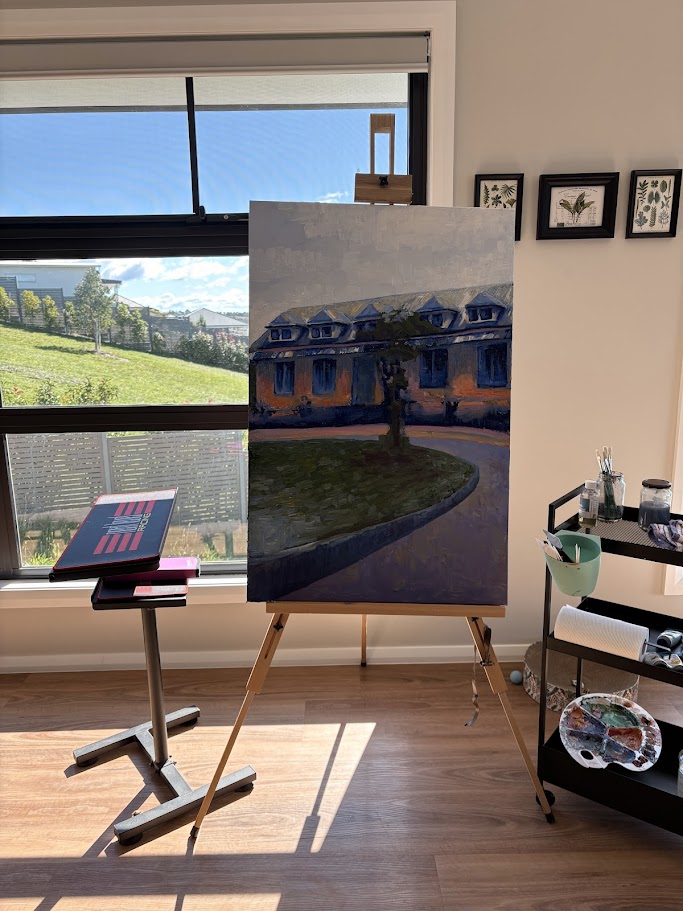
I sat again waiting (literally) for the paint to dry, pondering. I studied a bunch more of Ciochina’s works. I trawled back through his Instagram and was once again gobsmacked at how most of his landscapes are done in “plein air” – literally, French for “outdoors” – plonking himself down on some gauzy Parisian street and painting while the world mills around him. How! I had been doing my painting in bits and pieces, waiting for it to dry between layers so I could jump back in and progress a little bit more. In my head, oil paints and plein air were fundamentally incompatible.
Well, I had a free day ahead of me, Ludovico Einaudi on the record player, and new tubes of ultramarine and titanium white. Oh, and the wedding was less than a month away. It was time to lock in.
And lock in, I did. It’s almost comical when you look through the progess photos, because silly me only took them at the end of a session. It’s like chalk and cheese when you look between the two! We had not only gotten through the awkward phase, but had completely FINISHED the painting.
Emulating Ciochina’s style in full – not just matching his composition and strokes and colour use, but embracing the process of working with wet paint, coaxing colours to play nice and not blur and muddy into each other, smashing it out all in one go – made a world of difference. The piece came to life in that marathon session, all of the components singing in harmony, and my precious dappled light gleaming from the canvas.
The best part of a gift is the giving
The painting done, I threw myself into my maid of honour duties, hosting a hen’s weekend slumber party followed by a bougie high tea that took us through to the week before the wedding. The painting came out of her hiding space (she was secreted away to the husband’s man cave during the slumber party) and donned her bubble wrap robe for the journey up to Mittagong.
We had a few days to relax and prepare for the wedding before the day itself, so in that time, our lovely painting stayed hidden under our bed, while I concocted a plan to bring her out for a big reveal following my speech at the wedding. And that’s excactly how it went!
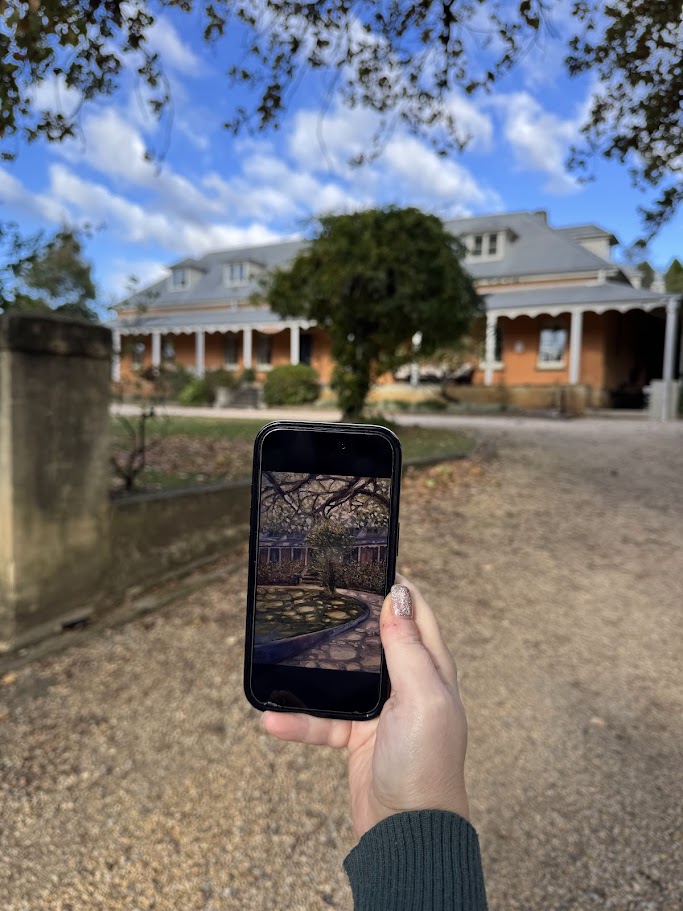
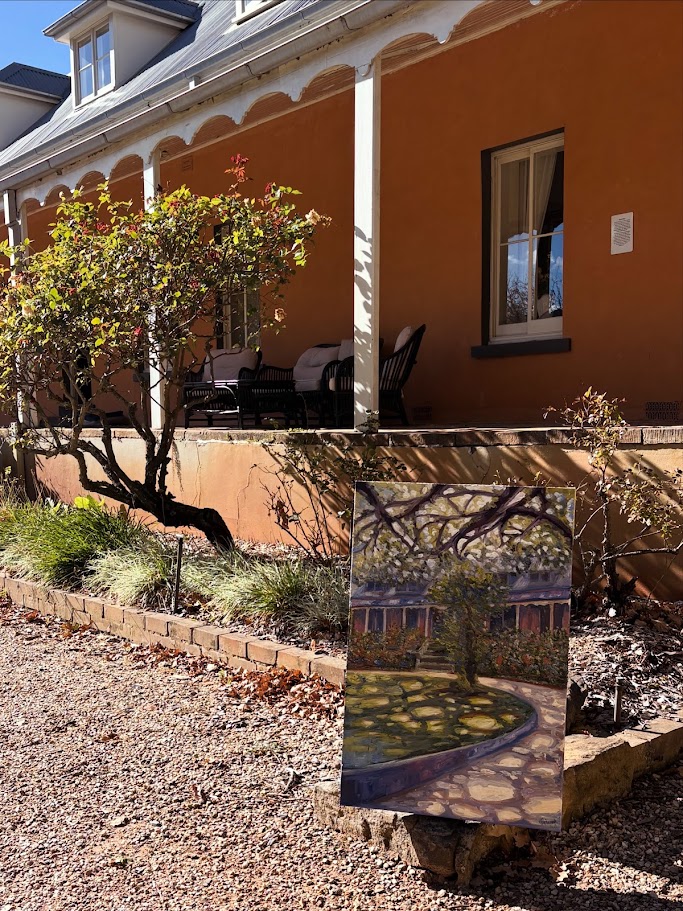
Making art as a gift is always a strangely vulnerable thing. There is nowhere to hide when you give someone something you have spent hours shaping with your own hands. But that is also what makes it special. It carries time inside it. It says: I thought about you. I noticed what mattered. I wanted to make something that could only be yours.
By the time I finished it, the painting felt less like a single artwork and more like a little blessing: for their marriage, their home, and the memories they will build together. My hope is that it becomes one of those pieces that quietly gathers meaning over time – something they see on the wall not just as a wedding gift, but as a reminder of the people who loved them on the day they chose each other.